This museum, located in the Black Forest (Schwartzwald) in Germany, has over 220 vehicles on display. It provides an excellent overview of cars produced in the Federal Republic of Germany from 1945 to 1960. There is an impressive collection of microcars (or bubblecars) and motorcycles. At various locations throughout the 3 floors of exhibition space there are period-correct scenes of domestic life: a 1950s kitchen, living room etc., all decorated with consumer goods typical of the period.
Lineup of Messerschmitt microcarsA trio of NSU Prinz models, including the rare Wankel-engined Sport Prinz (r)1950s German kitchenEarly VW BeetlesBrutsch Mopeta
Address:
Auto- und Uhrenwelt Schramberg Gewerbepark H.A.U. 3/5 78713 Schramberg
This is a very interesting museum. Not just because of the varied and historically interesting cars on display, of which there are over 300, but also because of the hundreds of other old cars that are not officially on display. However, you can view them from an elevated walkway. Condition varies between near-perfect and requiring ground-up restoration. For me, this part of the collection was the most fascinating. It was like discovering a barn-find.
Main exibition hall, Yvan Mahy musuemPart of the reserve collection at Mahymobiles
During the 1950s and 1960s the late Ghislain Mahy amassed a collection of old vehicles, bought for their scrap value and stored them away. In 1986, the Autoworld museum was opened in the grounds of the Cinqauntanire Park in central Brussels. The huge hall, which at one time housed the 1880 Great Exhibition, is now home to more than two hundred and fifty cars and motorcycles, jewels of the Mahy Collection. Unfortunately, it cannot hold more than a quarter of the Mahy collection.
Some require more attention than others..
In 1997 Ghislain’s son Ivan Mahy found a redundant textile factory in the town of Leuze-en-Hainaut, to house the rest of the collection.
Cars from all eras
Address:
Musée de l’Auto MAHYMOBILES Rue Erna 3, 7900 Leuze-en-Hainaut, Belgium
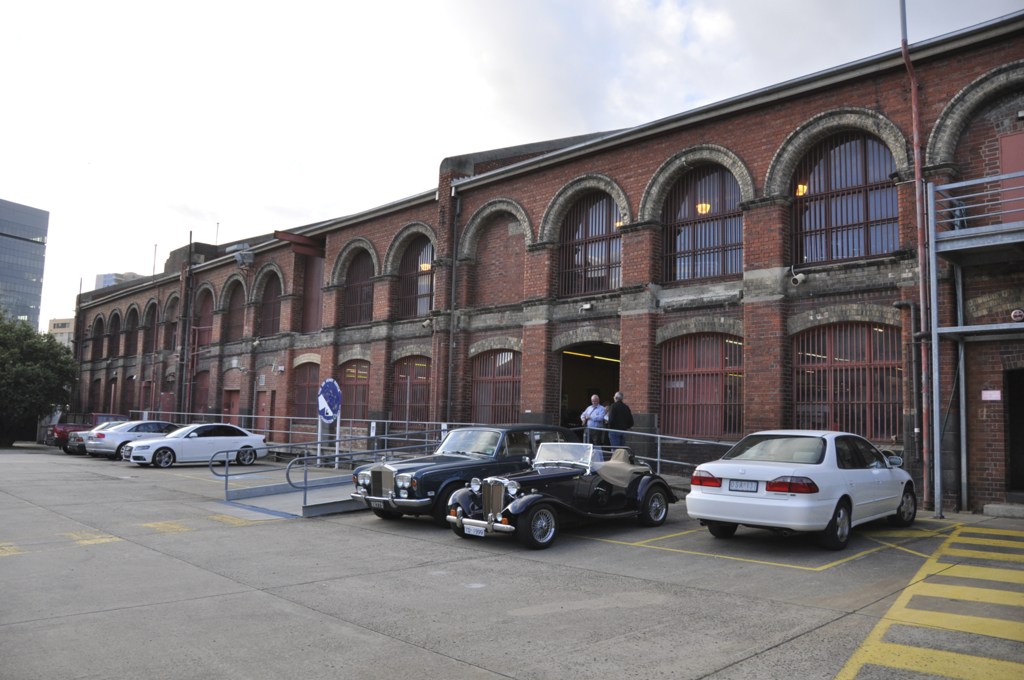
The Lin Fox collection is housed in an old customs warehouse in the docklands area of Melbourne, surrounded by modern high-rise buildings. Lindsay Fox established the Linfox haulage company in 1956 and has been collecting interesting cars for many years. The museum is not very large, but the interesting cars, mainly British and European, make it well worth a visit. Check the museum’s own website for opening times.
Lin Fox Museum buildingA trio of Jaguars at Lin Fox museumItalian exoticaMercedes-Benz 540K Cabriolet at Lin Fox museumPorsche 718 SK on display at Lin Fox museum
Address: 749-755 Collins Street, Docklands 3008, Melbourne, Australia
The Louwman Museum is one of the world’s best automobile museums. The collection began in 1934 when the Louwman family realised that the motor car was worth keeping for posterity. Opened at the current location in The Hague 2010.
Louwman Museum – The Great HallLouwmanMuseum – 1895 Panhard & Levassor Phaeton
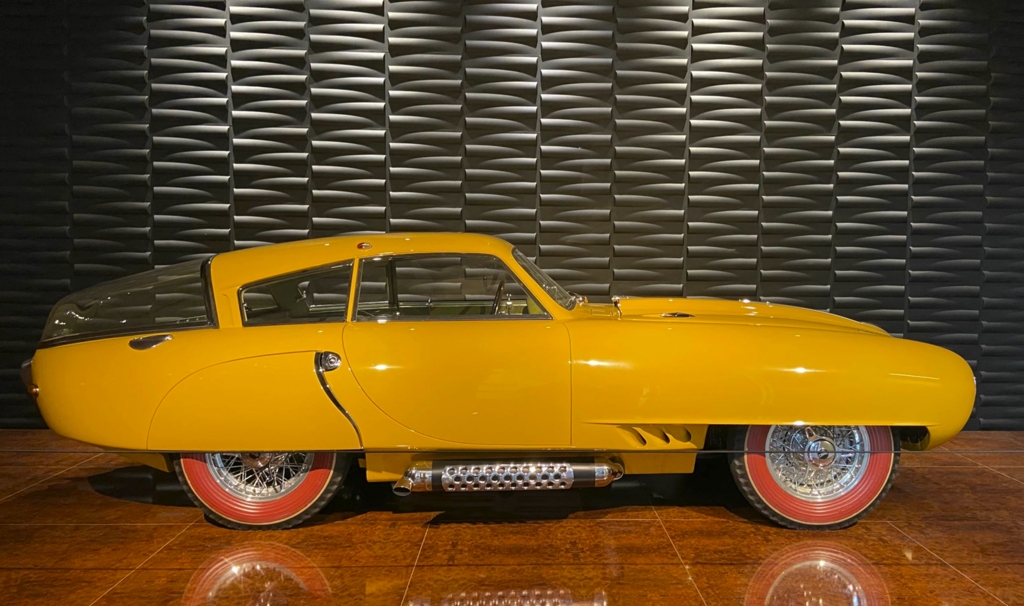
Louwman Museum – 1932 Bugatti Type 54 Bachelier RoadsterLouwman Museum – 1952 Pegaso Cúpula
This Pegaso Cúpula won the Best of Show award at Amelia Island. In the summer of 2022 the car was on display at the Guggenheim Museum in Bilbao.
Louwman Museum – 1959 Cadillac Series 62 Convertible
The motor museum is home to a delightful collection of motor vehicles, all of which have some connection with the Grand Dutchy of Luxemburg. The collection changes from time to time, so the cars shown here may not be on display when you visit the museum.
Delage
1930 Delage D8
The Delage D8 Normal shown here was delivered new in 1930 in this very same building.
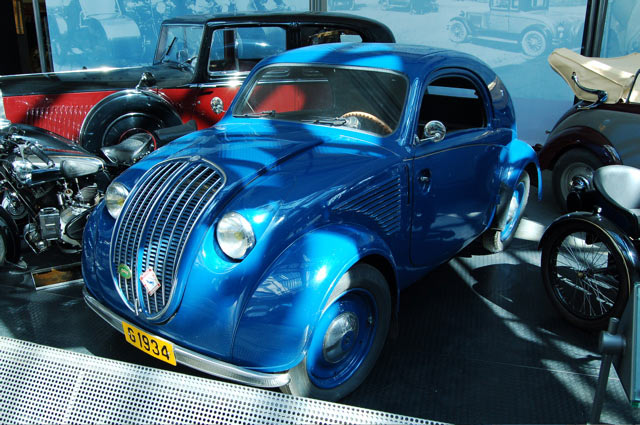
1960 MGA Coupé Special1936 Steyr Type 501910 Napier 26/30Museum Building
The collection is not very extensive, but the variety of cars makes it well worth a visit.
Conservatoire National de Vehicules Historiques 20-22 Rue de Stavelot, L-9280 Diekirch, Luxembourg
The Opel Museum in Tijnje in Friesland in the north of The Netherlands is home to a wide variety of Opel cars. Most are 1950s and 1960s models but there are some older cars such as a 1936 Super Six and a 1935 Opel Olympia. The museum also sells spare parts for old Opels.
The photos below give a general impression of the museum.
The museum, Rīgas Motormuzejs, was established in 1989 and was fully refurbished in 2016. The Riga Motor Museum is located in Riga, the capital of Latvia.
I visited the Riga Motor Museum in March 1999 and here are some of the exhibits I found most interesting. See the official website for more and an up-to-date information.
1939 Ford-Vairogs Junior The Vairogs company assembled Ford cars in Riga, Latvia, from September 1937. The Ford-Vairogs Junior was a variation of Europe’s Ford Junior Ten. This was followed a year later by the Ford-Vairogs V-8 60 and 85 hp models. Some Ford-Vairogs Taunus cars were also assembled until WW2 broke out and production shifted to military vehicles.
1950 REAF-50 There is some confusion as to whether this car should be called REAF, RAF or REF. There had been plans to start up car manufacturing in Riga straight after the war, but local politics were the cause of a long delay. However, in the summer of 1949 Stalin ordered that two automobile prototypes be built at the Riga Experimental Factory (REF) – originally established to manufacture radio loudspeakers, metal furniture and other useful articles, and be ready before the anniversary of the October Revolution. The team of designers under leadership of Engineering Captain Vsevolod Bahchivandzhi assembled the prototype using locally built parts, many of them still very experimental, including a hydro-mechanical transmission with automatic clutch. The car featured a modified GAZ-MM engine with two cylinders instead of four. The project was plagued by numerous setbacks, particularly in the transmission department. The only thing to reach Moscow by Stalin’s deadline however, was a photograph of the car! The REF officials were not sent off to Siberia as they had feared, but were granted another year to get the prototype car finished. And so in the Autumn of 1950 two REAFs (that presumably stood for Riga Experimental Automobile Factory), a sedan and a convertible, made it all the way to Moscow. The cars underwent thorough testing in Moscow where a commission concluded that although the concept of a cheap, comfortable car was a good one, and praised the modern body design, the prototypes themselves left something to be desired. The expensive automatic transmission worked jerkily and the engine vibrated excessively and it seems the car was lacking shock absorbers altogether. Fuel consumption was about three times that of comparable Moskvich-401. To cap it all, the designers had failed to take car maintenance into account: if the engine needed repairing, the body first had to be removed. Not surprisingly the commission concluded that unless the design was fundamentally improved, the REAF-50 was not fit for manufacturing. And so ended a dream that cost over one million rubles.
The sedan made it back to Riga and is now on display at the motor museum there. The cabriolet broke down en-route and was abandoned. Finally, RAF stands for the Riga Autobus Factory, where parts of the REAF-50 were manufactured, but apart from that and the similarity of the abbreviation, there is no connection between the two.
By Phil Seed [Based on the book Rigas Auto by Edvins Liepins]
The Den Hartog Ford Museum in Hillegom, the Netherlands opened in 1997 and closed in 2016 after the passing of the proprietor.
This private museum in Hillegom in Holland housed an impressive collection of 185 Fords, most of them from the USA. A-Fords, V-8s and Lincolns all in excellent condition. Hillegom is surrounded by bulb fields and is near the Keukenhof.
The National Museum – Schlumpf Bugatti Collection is chronicled all over the web and in hundreds if not thousands of books.
And yet in real life it is such a breathtaking display and so well worth a visit! The sheer size of the collection is overwhelming and even the most seasoned of motoring history enthusiasts can tire of the seemingly endless rows of exquisite marques. The Schlumpf brothers were famous for amassing an incredible collection of Bugattis, and when you realise how exclusive Bugattis are – many museums have just one or two – the collection really is huge.
Bugatti Type 35Bugatti EB110
Hoewever, the museum does have other makes besides Bugattis. Not just French makes such as Delahaye, Delage, Hotchkiss, Citroen and Peugeot, but also Jaguars, Mercedes-Benz etc.
There is also an impressive display of veteran cars1913 Le Gui B2 Torpedo
.
Address:
Cité de l’Automobile Musée National Collection Schlumpf 192, Avenue de Colmar 68051 Mulhouse France