During the war Peugeot had been planning a new ‘post-war’ model, and were able to introduce the new 203 in the Autumn of 1947. It was a sensationally modern car with a streamlined unitary body and a new four-cylinder 1300 cc engine. Although it would continue to be manufactured for many years longer, its replacement already appeared in 1955: the Peugeot 403.
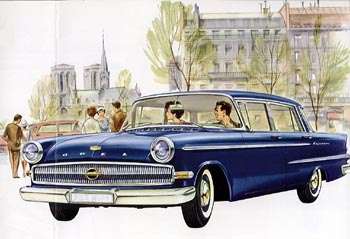
Again a new design. This model, also known as the P-LV, was larger than its predecessor. It still had the panorama-style windscreen, but the completely redesigned rear and lower grille gave the new Kapitän a distinctive appearance.
1960 Opel Kapitan
1960 Opel Kapitän
When production ceased in December 1963 145.616 units had been manufactured.
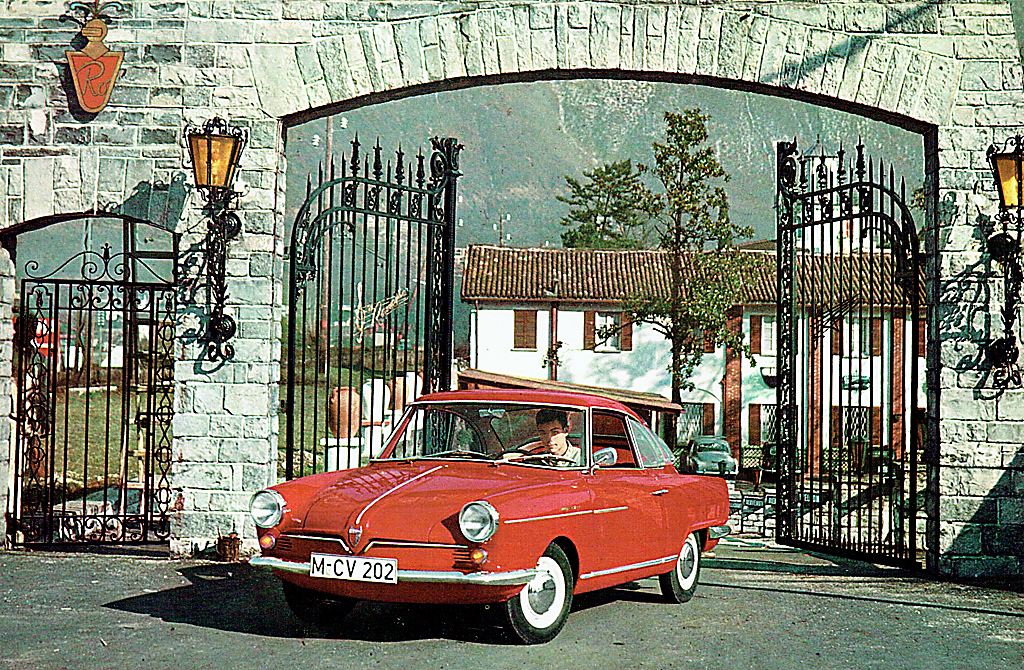
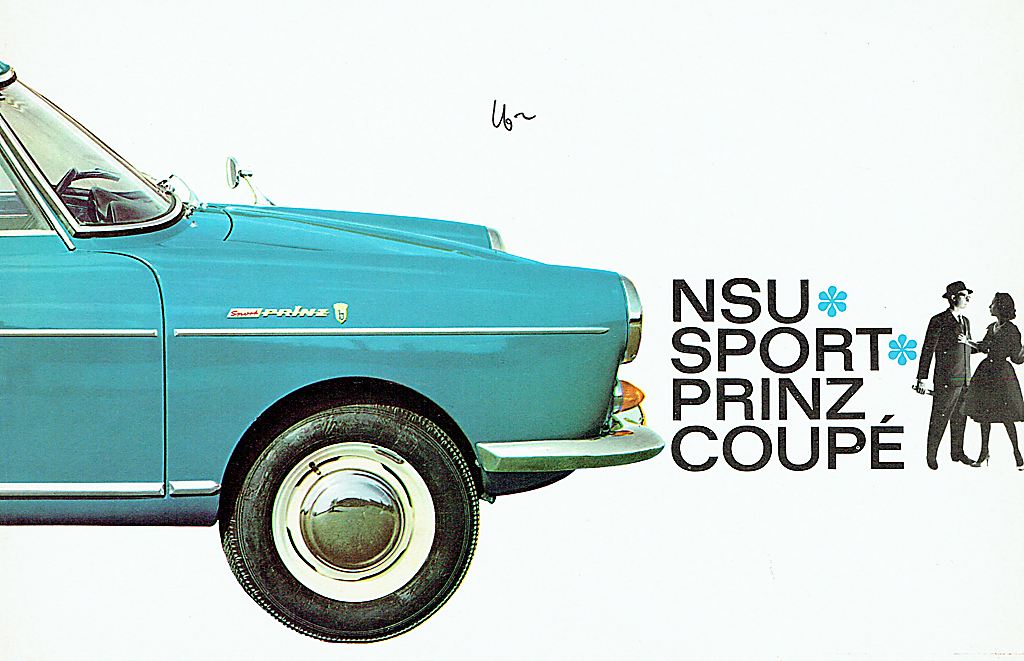
The Sport Prinz was designed at Bertone studios by Franco Scaglione
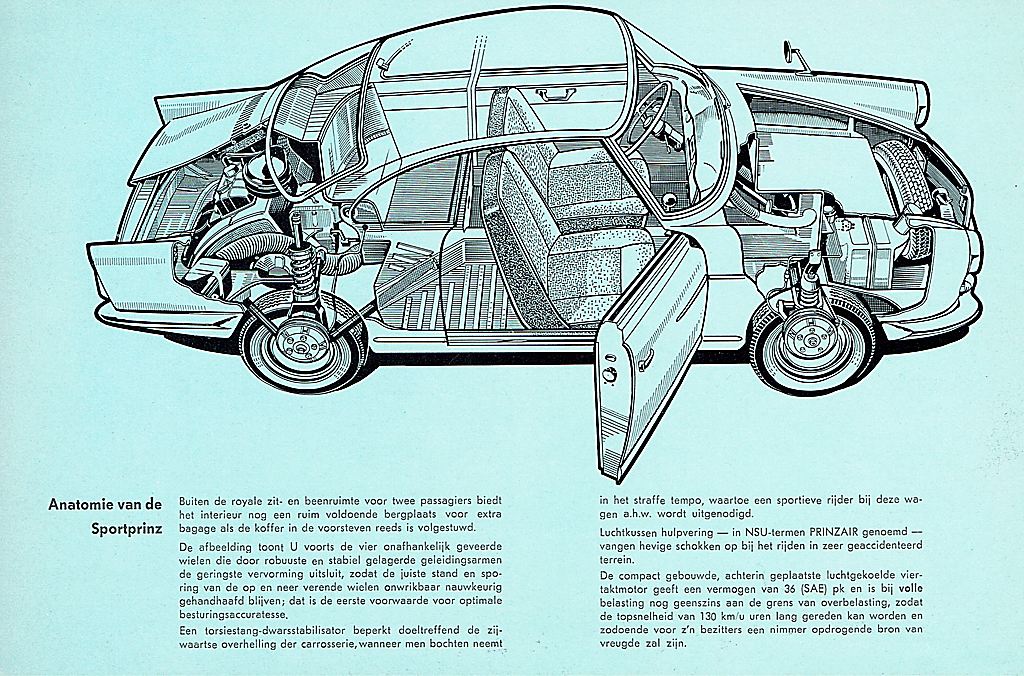
Introduced in September 1958. A two-seater coupé, designed by Bertone, who initially also built the body. The Sport-Prinz’s mechanicals initially came from the Prinz II/III, then from September 1961 onwards from the Prinz 4.
From March 1959 to June 1962, Bertone produced 2,715 cars. The Drauz bodywork factory in Heilbronn produced a further 18,116 cars from November 1960 to June 1967, bringing the total number of Sport-Prinz cars to 20,831.
The world’s first production Wankel-engined saloon. Caused quite a stir when first announced. Roadholding was excellent but engine reliabilty was initally a great let-down.
Initially called the Morris Mini-Minor, the Mini soon became a smash hit all over the world. Its innovative hydrolastic suspension provided superb roadholding, if a little harsh.