Matra M530 (1967-1973)
The Matra 530 LX was fitted with an 85 hp 1700cc V4 Ford Taunus engine.
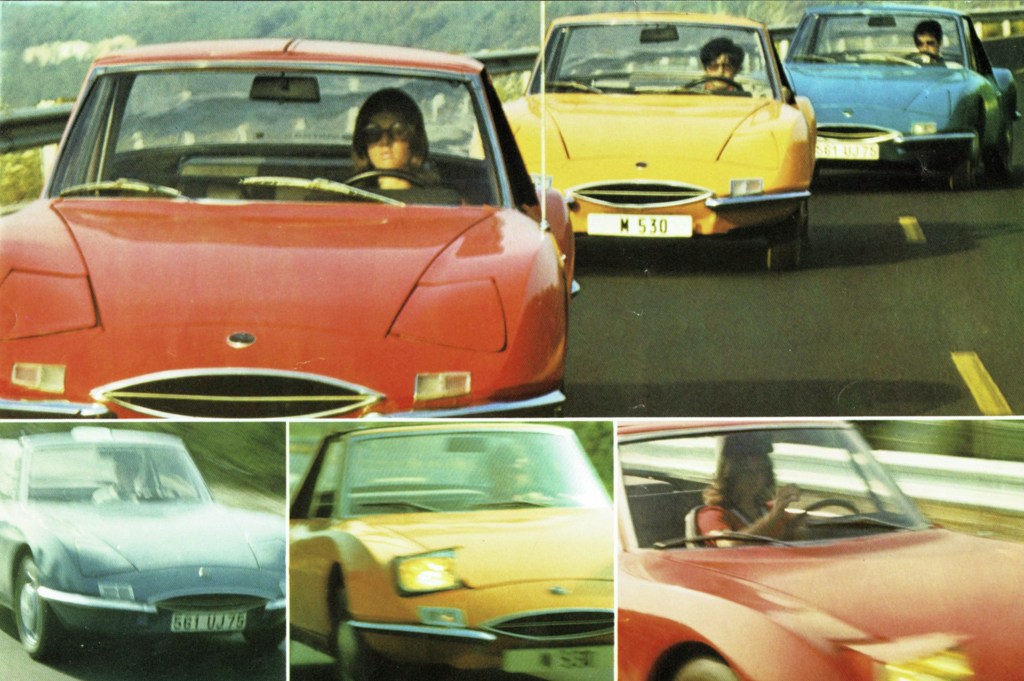

The Matra 530 LX was fitted with an 85 hp 1700cc V4 Ford Taunus engine.
Ford Escort Mk I (1968-1975)
The Ford Escort was developed by Ford of Britain. It replaced the aging Ford Anglia.


For the other Escorts see the Ford Europe menu


The Coupé version of the Consul Classic was called the Capri (a name that would be re-used from 1969 on).


The Corsair replaced the Consul Classic range and was essentially a long wheelbase re-skinned Cortina (the windscreen and much of the interior was the same) with modern aerodynamic looks. It was initially powered by a 1500 cc 4-cylinder in-line engine; in 1965 there was a choice between a 1600cc and a 2 litre V4 unit.

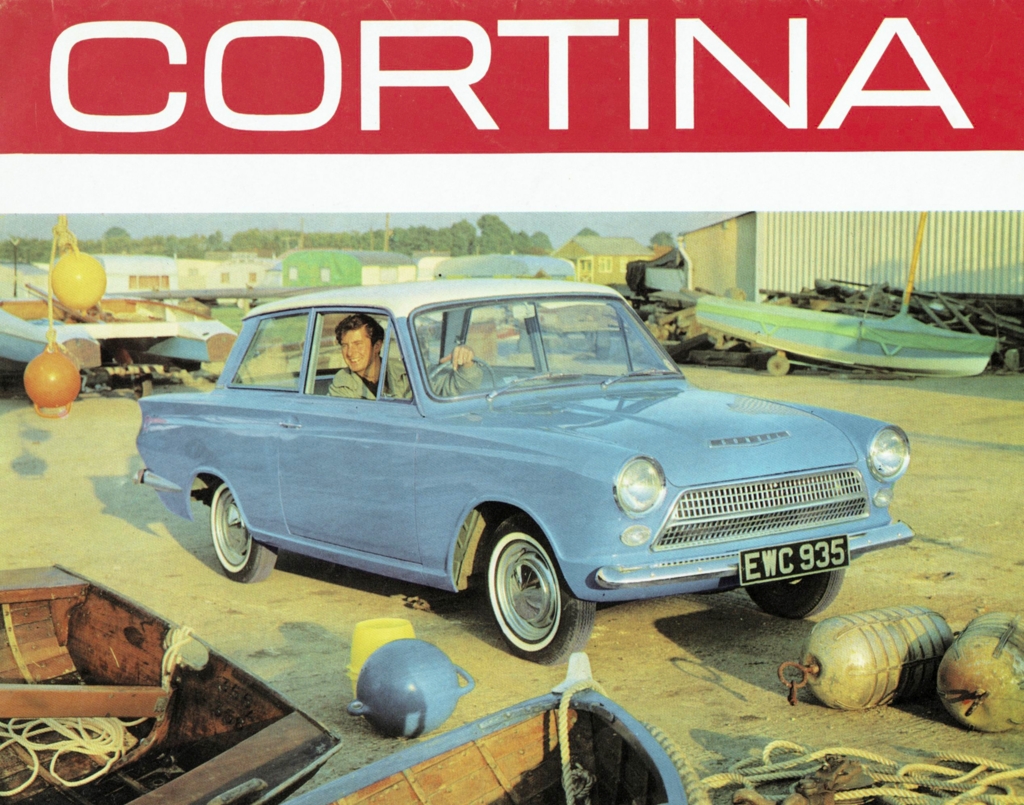
The Mark I Cortina, initially known as the Consul Cortina, was way more modern than its predecessor, the Consul Classic, and was an instant success. Not just as everyday transport, but also in motor racing. The Ford Lotus Cortinas were legendary.


By 1970 Ford was starting to consolidate their offerings in Europe, and the Mark III Cortina was virtually identical to the Taunus manufactured in Germany. Hence the code TC (Taunus Cortina).


The Mk IV was identical to the Ford Taunus. Mk V was an update of the Mk IV.
The Consul Mark I, code named EOTA, was launched in 1951. It was the successor to the Ford V8 Pilot. The Consul was the 4-cylinder version of the Ford Zephyr.


The Ford Consul Mk II followed in 1956 and was manufactured until 1962. It was also known by its Ford code name 204E.


The Consul line was discontinued, although the 1962 Cortina was initially called the Consul Cortina. The name was revived for the low-spec versions of the Grenada in 1972. See under Ford Europe.
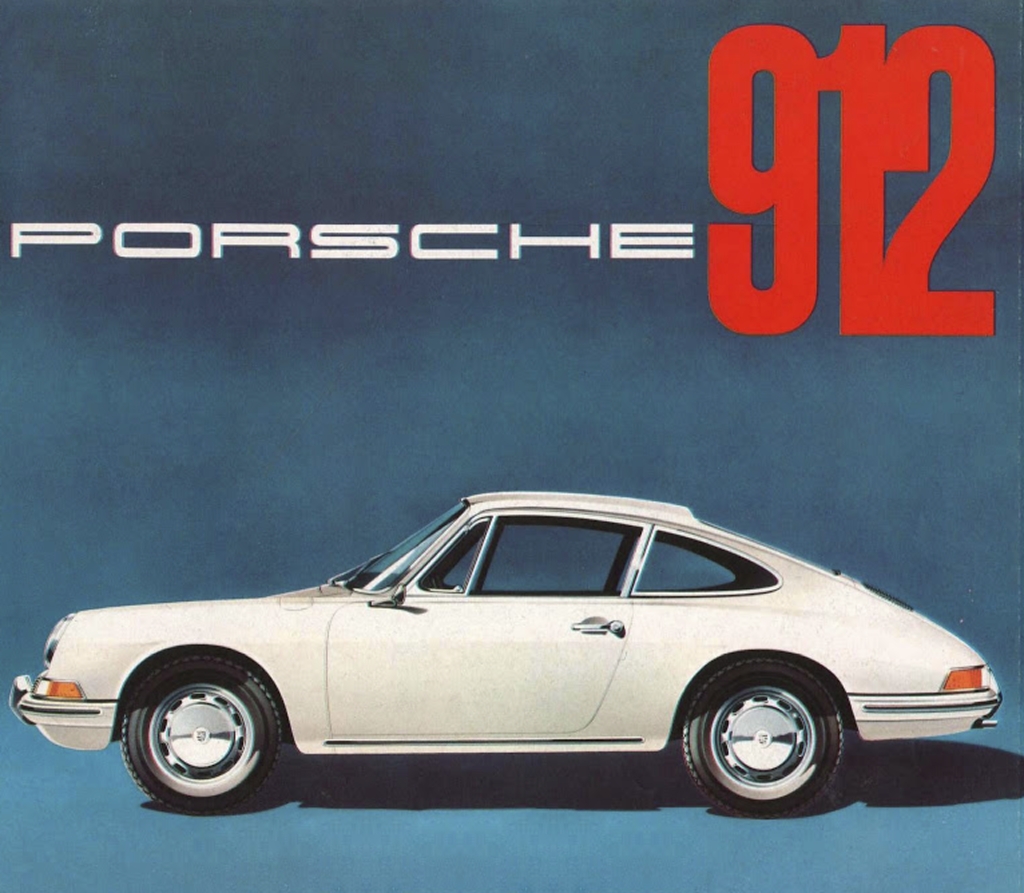
This was the less expensive 4-cylinder version of the 911.
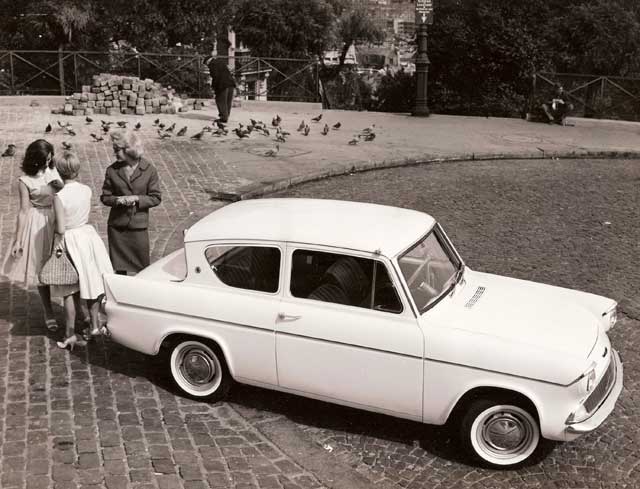

Family resemblance? The car in the background is a Lincoln Continental Mk V Landau.
PRESS RELEASE A
NOT FOR PUBLICATION OR BROADCAST BEFORE 30 SEPTEMBER 1959
EXCITING NEW BRITISH FORD
Bold Design Approach
From Ford’s Dagenham factory – now the largest and most fully integrated vehicle-producing centre in Europe – is launched today a completely new, radically styled light car bearing the world-famous name, “Anglia”.
Ford’s bold approach to design has resulted in a vehicle that is new in every detail styling, engine, transmission, suspension and furnishing.
From the likes, dislikes, preferences and prejudices of thousands of potential customers in nine countries, the Company’s design team has created a car that is as near to the image of public demand as market study and experience can make it. And by a brutal million mile testing programme covering four continents, they have produced what is unquestionably the most thoroughly researched and exhaustively tested light car the world has seen.
Striking Appearance
The Anglia’s appearance is both striking and elegant, every line being beautifully proportioned and every feature complementary to the next. It is available in no less than twelve single colours and four two-tone combinations.
The neatly grilled front sweeps back gracefully to a raked, full-depth windscreen supported by slim pillars. The low roofline extends rearward to meet a unique, reverse-angle rear screen. This exclusive and distinctive feature remains frost and snow-free in winter, protects rear passengers from the sun in summer and gives outstanding rearward visibility.
The boot, which follows the car’s line to blend smoothly with the tail-lamp assembly, is practically shaped to provide ten cubic feet of usable luggage space. Construction of the body is of the ‘integral’ or ‘unitised’ type which gives a standard of rigidity, durability and safety superior to other designs.
Space and Comfort
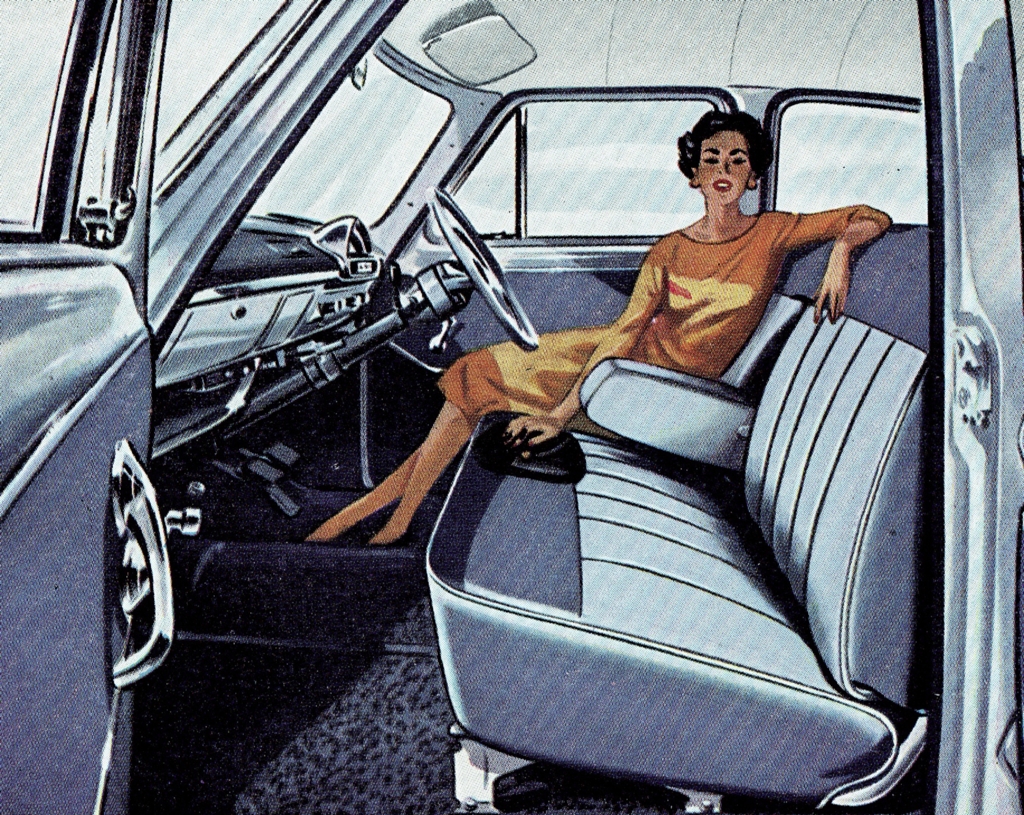
Two doors, carrying wind-down, flush-drop windows, each give an opening of 43 inches making entry and exit easy even for the six-footer. Inside, an agreeable impression of comfort and spaciousness strikes one immediately. There is nothing of the bareness and austerity often associated with cars in this price field. Headroom is ample and four adults can sit comfortably relaxed in the full-depth seating which, for driver and front passenger, is of the ‘bucket’ type. The driverÔøΩs seat has a 4-inch fore and aft adjustment. The occupants are in no way cramped and nor must they sit askew to find comfort as is the case with so many of today’s light cars.
Padded arm rests are fitted to the doors which, like the seats, are two-tone trimmed. Seating materials, in a wide choice of colours, are of PVC, cloth or, at extra cost, hide. The headlining is of light coloured, washable PVC and the floor has a tailored covering of heavy gauge rubber.
The clear-vision instruments are housed directly in front of the driver and include a speedometer, distance recorder, fuel and temperature gauges, ignition, oil pressure and headlamp main beam warning lights, and direction indicators. Choke- control, key-operated ignition/starter switch, turn and pull lighting switch, and the control for the dual, electric windscreen wipers are all logically positioned on the facia which also has provision for fitting radio and a fresh-air heater and demister.
Heating and ventilation have been the subject of special study and as a result, the Anglia has been given the most efficient system of any light car and is the only one to have full-width screen demisting and defrosting. Fresh air is drawn in through vents above the hood, distributed hot, cold, or in a controlled mixture, and extracted through the front and rear quarter lights. During the Anglia’s world trials, this system was proved capable of meeting every extreme of heat and cold encountered.
The dished, safety steering wheel has a shrouded column carrying antennae for operating the horn, turn-indicators and dipper.
The short, floor-mounted gear lever forms a natural extension to one’s arm and the lever-type handbrake control is located conveniently between the two front seats,
Traversing the car’s full width beneath the facia is a deep parcel shelf with a roomy, lockable glove compartment.
Power with Economy
The latest Anglia is a powerful performer. A completely news four-cylinder, water-cooled OHV 997 cc engine has been designed and developed for this model and embodies many special features. It has a compression ratio of 8.9 to 1 and produces 39 b.h.p. (nett) at 5,000 r.p.m. Its operating economy is outstanding and 43 m.p.g. touring fuel consumption can be expected under normal conditions.
Like the power units which give the Consul and Zephyr their sparkling performance, this new engine is ‘oversquare’, i.e. bore is greater than stroke. The short stroke reduces piston speed, thereby increasing engine life, and the large bore permits the use of bigger ‘easier-breathing’ valves and large, heavy-duty bearings.
The advantage of the oversquare principle is perhaps best illustrated by the fact that during a mile’s driving in top-gear, a piston in this new engine travels 1182 feet up and down the cylinder wall – considerably less than in engines with a more conventional bore-to-stroke ratio and almost half that of some. In fact, the engine is so oversquare that the cylinder block is less than 7 inches high making for greater strength and rigidity. And by reducing the overall height of the complete engine the body designers have been given greater scope in styling a ‘low-drag’ aerodynamic front end.
The undesirable weight penalty of overhead valve design has teen eliminated by the use of light alloys for certain components coupled with an advanced Ford- engineered hollow crankshaft.
Every modern refinement has been incorporated in this engine to produce power with economy, flexibility, reliability and stamina. Even the combustion chambers are machined – a refinement normally associated with expensive sports cars. And being water-cooled, it is extremely quiet in operation.
Four-Speed Gearbox
Power is transmitted through a 7ÔøΩ inch diameter, single dry-plate, cushion hub clutch to a new, four-speed, synchromesh gearbox. All gears run on ball or needle roller bearings and blocker-type synchro-mesh on 2nd, 3rd and top provides smooth, instant engagement. An open drive shaft connects to the new, hypoid rear axle.
Easy Servicing
Ford designers have not ignored the need for simple, routine servicing and full attention has been given to keeping effort and cost to the minimum. The bonnet hinges forward to provide direct and easy access to the engine compartment where those items requiring regular inspection – dipstick, battery, radiator, hydraulic fluid reservoir, etc – come readily to hand.
A 4-point jacking system is provided and the spare wheel is housed vertically against the front panel of the boot.
On the Road
Within a few hundred yards one feels completely at home in the Anglia. All-round visibility is unparalleled for a car of its size and comfort is really first class. The re-circulatory ball steering is feather-light and gives a turning circle of 32 feet,
Roadholding capabilities to impress even the sports car enthusiast are provided by Ford’s unique front suspension – independent coil springs with integral telescopic shock absorbers – together with special 45 inch longitudinal, asymmetric, semi-elliptic rears. In fact this highly developed combination provides stability and roadholding without equal in the light car field.
The short, semi-remote floor-mounted gear lever and the virtually ‘unbeatable’ synchros make the gearbox a delight to use. 0-30 mph is achieved in approximately 7 seconds, 0 to 60 mph in approximately 29.5 seconds. Maximum speed is 71 mph.
Formidable World Contender
In the great development of the motor industry in recent years, Ford of Dagenham’s products have gained a tremendous reputation throughout the world’s markets.
This forward-looking company has a tremendous stake in the future and has spent almost £70 millions – more than any manufacturer outside the USA – to make its production facilities equal to the world’s best.
The new model announced today is part of this stake and the company has spared nothing in ensuring that it is based on a sound assessment of what the customer wants.
Here is yet another Dagenham product offering outstanding value for money and which, in the fierce battle for world trade, will be a formidable contender.
End